

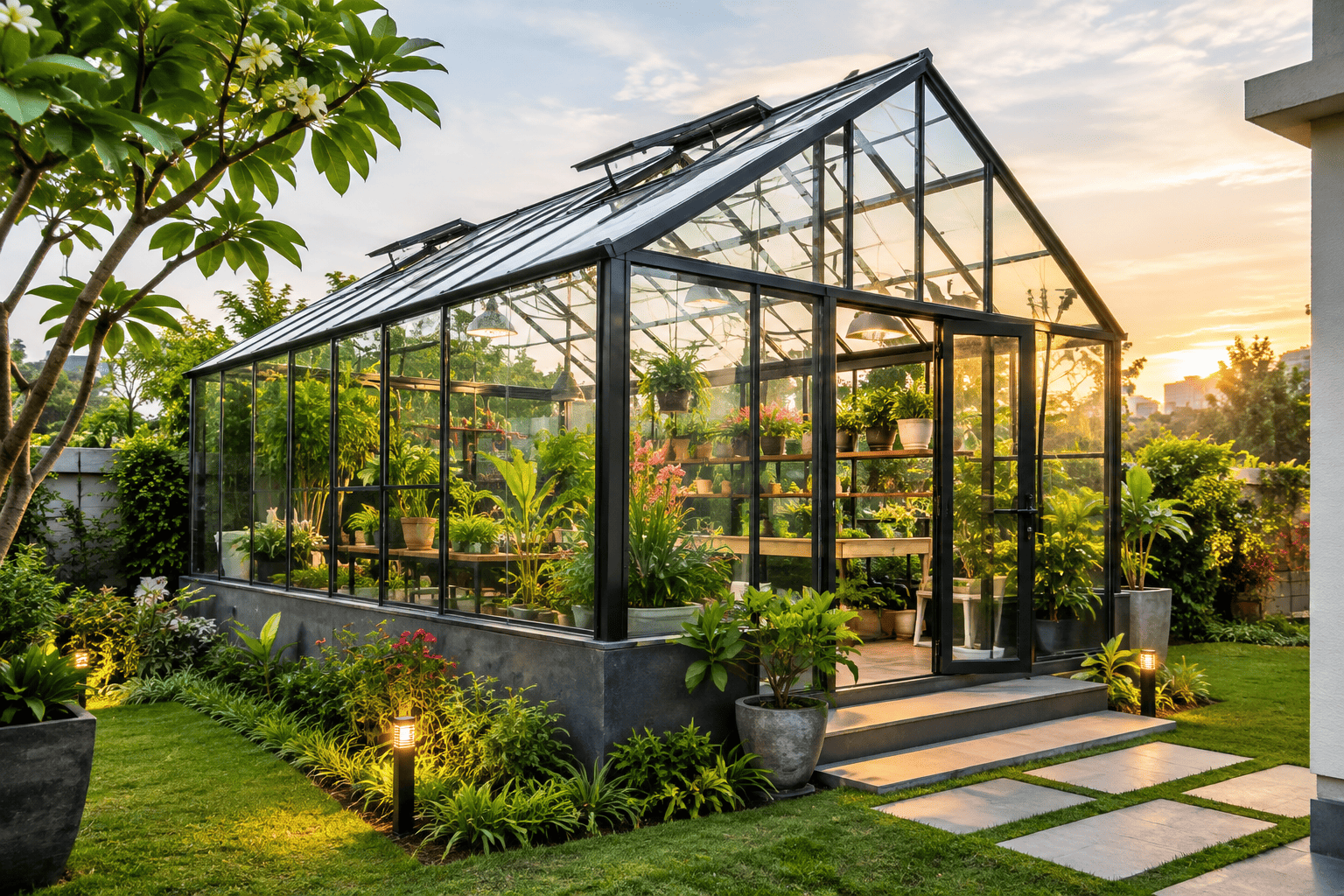
A glass house can add something very different to a garden, terrace or commercial property. It provides a bright, enclosed space where plants can be protected while still receiving plenty of natural light.
But a good glass house is not simply a structure covered with glass. Its design needs to consider sunlight, ventilation, drainage, irrigation, materials and the way the space will actually be used.
Whether the requirement is for a home garden, plant nursery, hotel, school or commercial property, proper planning makes a significant difference to the final result.
What Is a Glass House?
A glass house is a covered structure designed with transparent glass panels that allow natural light to enter while creating a more protected environment for plants.
The size and design can vary considerably. A small structure may be suitable for a residential garden or terrace, while larger installations can be planned for nurseries, institutions and commercial properties.
The purpose is also not limited to growing plants. A well-designed glass house can become an attractive architectural feature, a dedicated plant area or a peaceful green space within a property.
Why Consider a Glass House?
One of the biggest advantages is natural light. Plants can receive sunlight without being completely exposed to outdoor weather conditions.
A glass house can also help organise plants in a dedicated area. Delicate plants, seasonal plants and specialised collections can be maintained separately from the main garden.
For properties where appearance is important, glass also creates a clean and modern look. This makes such structures suitable for residential gardens as well as hotels, resorts, restaurants and other commercial spaces.
Glass House for Residential Gardens
A residential glass house does not necessarily need a large amount of space.
Depending on the property, it can be installed in a backyard, garden, terrace or another suitable area. The structure can be designed according to the available space instead of following a fixed size or shape.
Homeowners may use it for:
- Growing flowering plants
- Protecting delicate plants
- Maintaining plant collections
- Creating a dedicated gardening area
- Growing selected plants throughout different seasons
- Adding a distinctive feature to the garden
The design should complement the existing property rather than looking like a separate structure that was simply placed in the garden.
Glass Houses for Nurseries and Commercial Properties
Nurseries can benefit from a dedicated protected area for growing and maintaining plants. A glass house can provide an organised environment where plants can be grouped according to their requirements.
Commercial properties can also use these structures in different ways. Hotels and resorts may incorporate them into their landscape design, while schools and institutions can use them as gardening or educational spaces.
For larger projects, the design may include wider access, irrigation arrangements, drainage systems and enough internal space for regular maintenance.
When looking for a Glass House Manufacturer in Kolkata, it is important to discuss the actual purpose of the structure before finalising the design. A nursery installation and a residential glass house may have completely different requirements.
Important Factors in Glass House Design
1. Location
The location should be selected after considering sunlight, surrounding buildings, trees and accessibility.
The amount of sunlight available throughout the day can affect both plant health and the internal temperature of the structure.
2. Ventilation
Ventilation is particularly important in a glass structure.
Glass allows sunlight to enter, but this can also cause the temperature inside to rise. Properly planned doors, openings and ventilation arrangements can help improve airflow and reduce excessive heat.
This is especially relevant in Kolkata, where summers can be hot and humid.
3. Irrigation
Watering requirements should be considered during the design stage itself.
A small residential structure may only require manual watering, while larger installations can benefit from drip irrigation or an automated watering system.
Planning irrigation properly can make daily maintenance easier and help provide more consistent watering to the plants.
4. Drainage
Drainage should never be overlooked.
Excess water from irrigation and rain needs to move away from the structure efficiently. Proper flooring levels and drainage arrangements can help prevent water accumulation and reduce maintenance problems.
This becomes particularly important during Kolkata’s monsoon season.
5. Frame and Glass
The frame and glass should be selected according to the size and purpose of the installation.
A decorative residential glass house may have different structural requirements compared with a large nursery installation. Safety, durability, appearance and long-term maintenance should all be considered before selecting the materials.
Can a Glass House Be Custom Designed?
Yes. In fact, customisation is often useful because every property has different requirements.
The structure can be planned according to the available area, preferred appearance, plant requirements and access needs.
For example, a terrace installation may need a compact design, while a garden installation may have more freedom in terms of shape and size.
A commercial project may also require additional space for plant movement, irrigation equipment or maintenance activities.
This is why choosing a Glass House Manufacturer in Kolkata should involve more than simply comparing prices. Understanding the site and developing a suitable design is an important part of the process.
Glass House vs Traditional Greenhouse
Glass houses and greenhouses are often discussed together because both can provide a protected environment for plants. However, the materials, construction and intended appearance can differ.
Traditional greenhouses may use polycarbonate sheets, specialised plastic coverings or other materials, while glass houses primarily use glass panels.
Glass provides a premium and visually clean appearance, which can be particularly suitable for properties where the structure is also expected to contribute to the overall landscape design.
The right option depends on the purpose, available space, budget and desired appearance.
Maintenance After Installation
Like any other landscape feature, a glass house needs regular care.
Glass panels should be cleaned periodically to remove dust and dirt so that natural light can pass through effectively.
The plants themselves require regular watering, pruning and care. Doors, ventilation points, irrigation systems and drainage areas should also be checked from time to time.
Regular maintenance helps keep the structure attractive and allows small issues to be identified before they become larger problems.
Planning a Glass House in Kolkata
Kolkata’s climate makes proper planning particularly important. High temperatures, humidity and seasonal rainfall all need to be considered while designing the structure.
The available sunlight, direction of the structure, ventilation, drainage and irrigation should be evaluated according to the actual site.
At Mavira Landscapes, glass house projects can be planned around the requirements of the property, whether it is a residential garden, terrace, nursery or commercial landscape.
The focus should always be on creating a structure that looks appropriate for the property while remaining practical to use and maintain.
Finding the Right Glass House Service
Before choosing a service provider, it is worth discussing the complete project rather than looking at the structure alone.
Ask about the design, materials, ventilation, drainage, irrigation, installation process and future maintenance requirements. This gives a much clearer idea of what you are actually getting.
If you are searching for a Glass House Near Me, look for a local service provider who can understand the site and provide a solution suited to your requirements instead of offering only a standard structure.
Final Thoughts
A well-planned glass house can be both functional and visually appealing. It can provide a protected environment for plants while becoming an attractive part of a garden, terrace or commercial property.
The success of the project depends on getting the basic details right — sunlight, ventilation, drainage, irrigation, materials and maintenance.
For anyone considering a glass house in Kolkata, starting with the purpose and available space is the best approach. Once those factors are clear, the right design and installation solution becomes much easier to plan.
If you are comparing a Glass House Near Me for your home, nursery or commercial property, focus on the quality of planning and installation rather than choosing only on the basis of price. A properly designed structure can remain useful and attractive for many years.